For many entrepreneurs and inventors, the journey from a breakthrough idea to a physical product on a retail shelf can appear daunting. The manufacturing landscape is often perceived as a complex web of technical specifications, high minimum order requirements, and fragmented vendors. However, bringing a plastic-based product to market is a structured process that, when managed correctly, transforms an abstract concept into a scalable business asset.
At
Delaney Manufacturing Services, we specialize in bridge-to-market solutions that consolidate the entire lifecycle of a product under one roof. With over
50 years of experience, we have refined a five-step framework designed to mitigate risk and accelerate time-to-market for new ventures.
Step 1: Transforming a Napkin Sketch into Digital Precision (CAD)
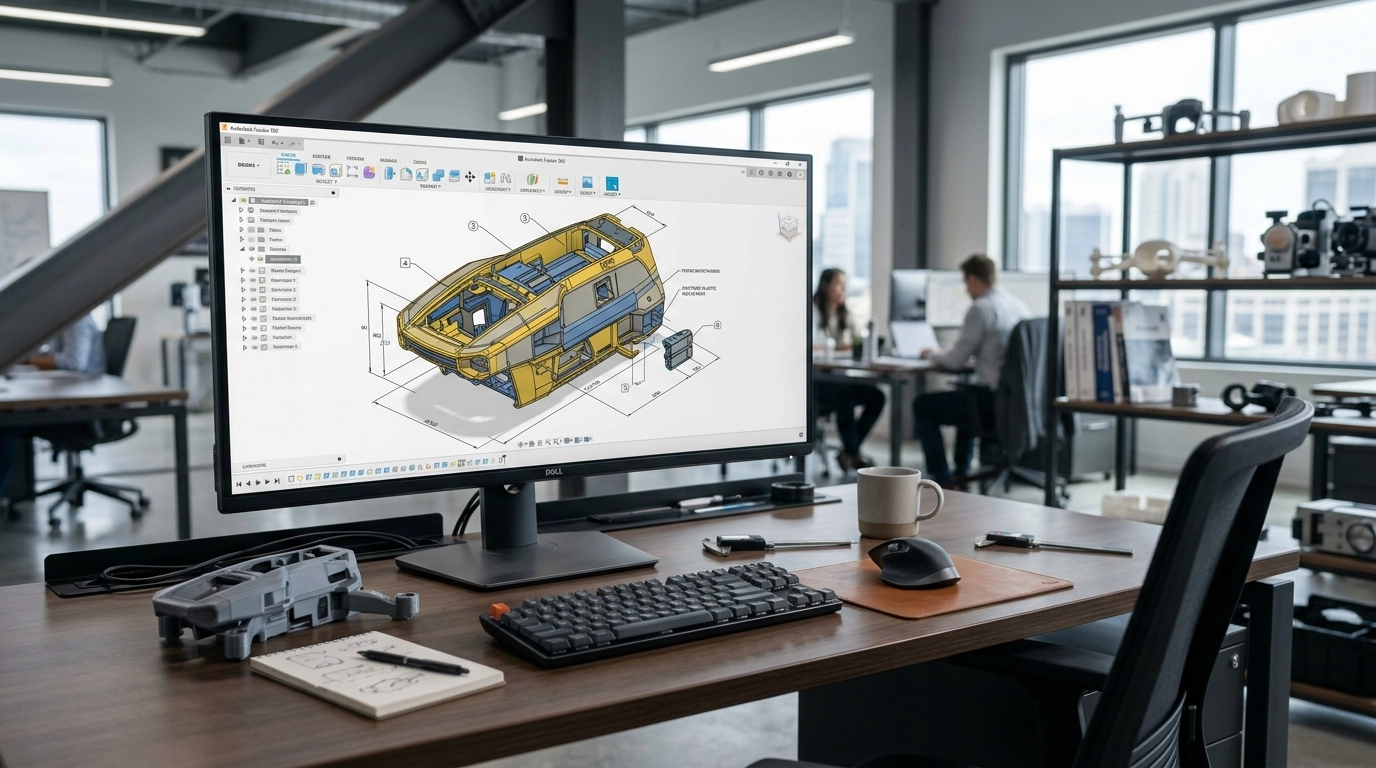
The inception of every great product often begins with a simple visualization: frequently referred to in the industry as the “napkin sketch.” While a sketch identifies the problem and a potential solution, it lacks the technical geometry required for manufacturing. The first critical step is transitioning these ideas into
Computer-Aided Design (CAD).
CAD modeling serves as the blueprint for your entire project. During this phase, engineers translate your vision into precise 3D data. This is not merely about aesthetics; it is about functional engineering. We analyze wall thicknesses, draft angles, and structural integrity to ensure the part can actually be manufactured through injection molding.
By establishing a robust CAD foundation early, inventors can avoid costly re-designs later in the production cycle. Our team prioritizes
same-day response times during this phase to ensure that the momentum of your innovation is never stalled by administrative delays.
For clients with an existing product,
3D scanning can also play a valuable role at this stage. We can scan physical parts to create accurate digital models for
reverse engineering, design refinement, and performance improvements. This is especially useful when original CAD files are unavailable or when a product needs to be updated for manufacturability, cost reduction, or feature enhancement.

Step 2: Prototyping and Design Validation
Once the digital model is finalized, the project moves into physical validation. For an entrepreneur, seeing and feeling a physical representation of their product is a pivotal milestone.
Prototyping allows you to test the form, fit, and function of the design before investing in hard tooling.
We utilize advanced
3D printing technologies to create high-fidelity prototypes. This stage is crucial for:
- Ergonomic Testing: Ensuring the product feels right in the hand of the end-user.
- Mechanical Verification: Testing snap-fits, hinges, or assembly tolerances.
- Investor Presentations: Providing a physical “looks-like, works-like” model to secure funding or retail interest.
Using 3D printing for rapid prototyping enables multiple iterations at a fraction of the cost of traditional methods. It is the ultimate insurance policy against design flaws that could otherwise lead to expensive mold modifications.

Step 3: Navigating Custom Mold Production and the ‘No Minimum’ Advantage
Transitioning from a prototype to a finished part requires a custom injection mold. This is often where many startups encounter their biggest hurdle: high upfront costs and the requirement for massive production runs.
At Delaney Manufacturing Services, we address this challenge through our
short-run production capabilities and a strict
no-minimum order policy. We understand that as an entrepreneur, you need to validate your market without over-extending your capital on thousands of units of unsold inventory.
Our mold production team manages the creation of your tooling in-house. Whether you need a bridge mold for market testing or a multi-cavity tool for high-volume growth, we align the tooling strategy with your current business stage. For more information on navigating this technical phase, you can explore our
comprehensive guide to plastic injection molding.
Step 4: High-Precision Production and Advanced Finishing Techniques
With the mold finalized, the project enters the production phase. This is where the raw resin is transformed into your final product under high pressure and temperature. However, the manufacturing process does not end when the part is ejected from the mold.
To transform a generic plastic part into a branded consumer product, professional finishing is essential. We offer a suite of in-house secondary operations:
- UV Inkjet Printing: High-resolution, full-color graphics applied directly to the plastic surface, ideal for branding and complex designs.
- Laser Etching: A high-precision process used to create permanent, durable markings, logos, or serial numbers without the use of inks.
- Metal-to-Plastic Conversion: For those looking to optimize existing products, we specialize in re-engineering metal components into high-performance plastics to reduce weight and cost. Learn more about this in our guide to metal-to-plastic conversion.

Step 5: Streamlining Growth with Full-Service Fulfillment
The final step in the journey is moving the product from the manufacturing floor to your customer’s doorstep. For many small businesses, managing logistics is a significant drain on resources.
Our
“all under one roof” philosophy extends to the final stages of the supply chain. We offer:
- In-House Assembly: Combining molded parts with electronic components, fasteners, or other hardware.
- Packaging: Custom retail packaging solutions that ensure your product is shelf-ready.
- Direct Drop-Shipping: We can store your inventory and ship orders directly to your customers or retail partners, functioning as your back-end logistics department.
By integrating fulfillment with production, you reduce shipping costs between vendors and significantly shorten the feedback loop for quality control.

Partnering for Success
Taking a product from concept to production is a marathon, not a sprint. Success depends on choosing a manufacturing partner who views your project as a long-term collaboration rather than a one-off transaction.
At
Delaney Manufacturing Services, we provide the technical expertise of a large-scale manufacturer with the agility and responsiveness required by modern entrepreneurs. Whether you are holding a rough sketch or a finished CAD file, our team is ready to guide you through the complexities of the manufacturing world.
Ready to take the next step?
Contact us today for a same-day response on your project requirements.
|
| Images for illustrative purposes. |