Introduction to Multi-Material Joining in Modern Manufacturing
Modern product design increasingly demands the integration of dissimilar materials. Whether engineers are combining durable thermoplastics with high-strength metal brackets, sensitive printed circuit boards (PCBs), or electronic components, the challenge remains the same: how to join them securely and cost-effectively without compromising structural integrity. While adhesives, ultrasonic welding, and mechanical fasteners each have their place,
heat staking has emerged as the gold standard for post-molding assembly in complex applications.
At
Delaney Manufacturing Services, we specialize in end-to-end product development: bridging custom plastic part design, high-precision injection molding, and advanced secondary operations under one roof. In this comprehensive guide, we examine the mechanics of heat staking, its engineering benefits, key industry applications, and how proper design integration maximizes product reliability.
What is Heat Staking and How Does It Work?
Heat staking (also known as thermal staking or thermoplastic staking) is a specialized thermal process used to join molded plastic components to dissimilar materials. It works by reforming a molded plastic stud, boss, or pin using localized heat and controlled pressure, creating a mechanical interlock that permanently secures the mating component.

The process follows a precise sequence:
- Preparation and Alignment: The primary plastic component is produced via plastic injection molding services with integrated bosses or studs. The secondary component (such as a metal bracket, stamped plate, or PCB) features corresponding pre-drilled holes that slip directly over these bosses.
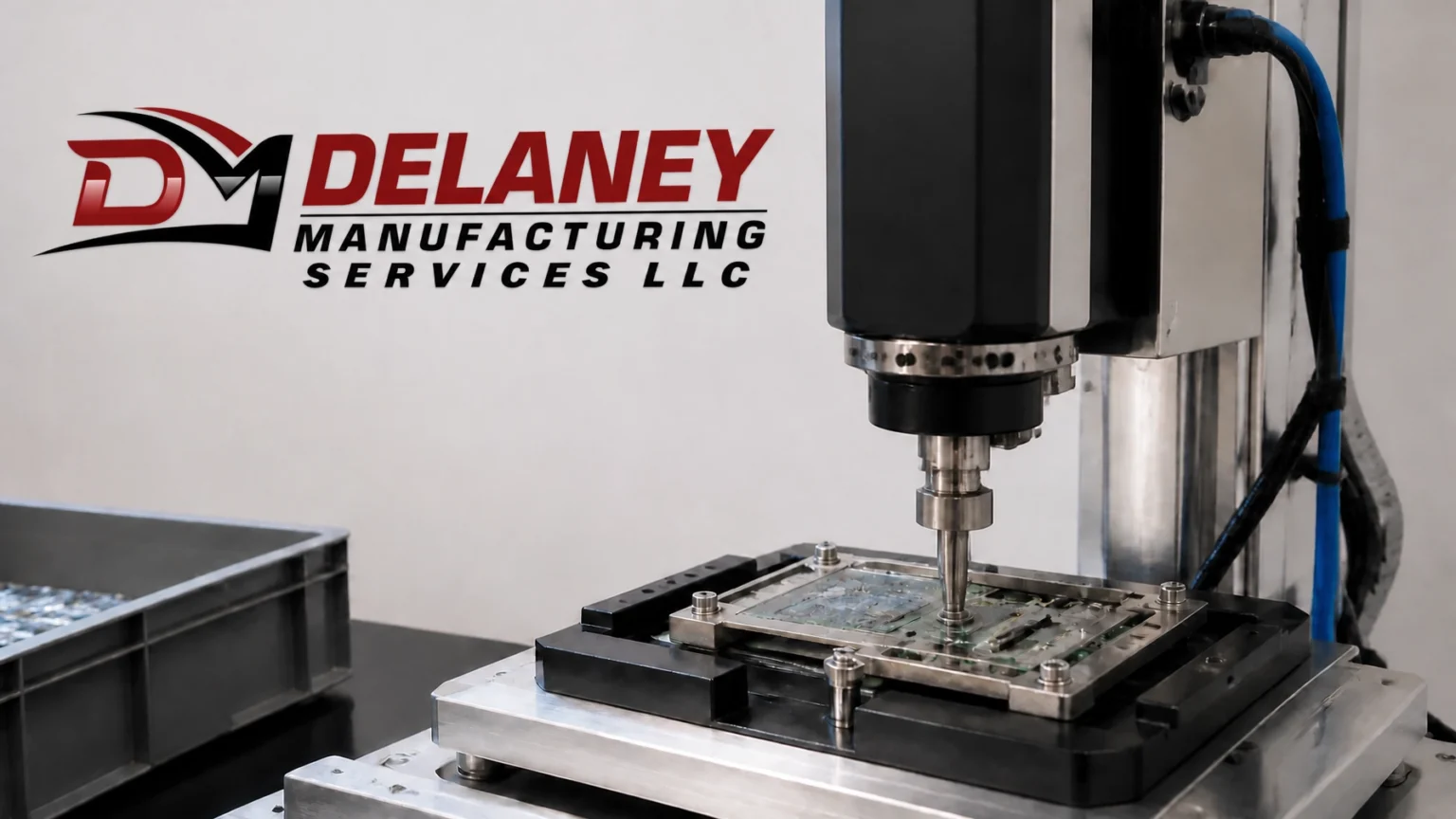
- Controlled Heating: A heated metal tool: known as a thermode, thermal tip, or hot bar: contacts the top of the plastic boss. The tool brings the thermoplastic material precisely to its glass transition or melt temperature without degrading the polymer chains.
- Deformation and Shaping: Under consistent, programmable downforce, the softened plastic flows into the cavity of the staking tip, forming a rivet-like head, cap, or flange that captures the mating component securely.
- Cooling and Solidification: The thermode remains in position under dwell pressure as the plastic cools below its softening point. Once solidified, the tool retracts, leaving a permanent, high-strength mechanical joint.
Engineering Benefits Over Traditional Joining Methods
When evaluating assembly techniques for multi-material enclosures, design engineers weigh factors such as joint strength, cycle times, stress concentration, and particulate generation. Heat staking provides distinct engineering advantages:
- Reliable Dissimilar Material Bonding: Because the joint relies on mechanical geometry rather than chemical or molecular fusion, heat staking effortlessly joins thermoplastics to metals, ceramics, glass, and dissimilar plastics.
- Elimination of Extra Hardware: By utilizing molded-in bosses and thermal deformation, assemblies eliminate the need for screws, nuts, washers, and chemical adhesives, reducing bill-of-materials (BOM) costs and assembly steps.
- Low Particulate and Clean Operation: Unlike ultrasonic welding, which can generate microscopic plastic flash and particulate contamination via high-frequency friction, heat staking is a clean, low-stress process ideal for sensitive electronics and medical devices.
- High Repeatability and Precision Control: Modern heat staking equipment allows precise closed-loop control over temperature, dwell time, and applied force, guaranteeing uniform joint strength across high-volume production runs.

Critical Design Considerations for Injection-Molded Parts
Achieving optimal joint performance requires proactive collaboration between industrial designers and manufacturing experts during the
custom plastic part design phase. Several factors dictate the success of a heat-staked assembly:
- Boss Dimensions and Draft: Molded studs must provide sufficient volume to form a robust head. Proper draft angles and generous fillets at the base of the boss prevent localized stress concentrations and sink marks during molding.
- Clearance and Tolerancing: Holes in the mating metal or plastic component must accommodate the boss diameter with appropriate radial clearance, ensuring smooth insertion and uniform material flow during forming.
- Material Selection: Heat staking requires at least one thermoplastic component (such as ABS, PC, PP, PA, or PBT). Thermoset plastics cannot be remelted and require alternative fastening strategies like insert molding.
- Process Window Optimization: Engineers must establish strict process parameters. Insufficient heat or pressure results in under-formed, weak heads, whereas excessive temperature causes material degradation or flash.
Real-World Applications Across Industries
Heat staking’s versatility makes it indispensable across diverse manufacturing sectors where multi-material integration is standard practice:
- Automotive Industry: Dashboard assemblies, instrument clusters, interior trim panels, and electronic control unit (ECU) housings rely on heat staking to secure circuit boards and metal backing plates against persistent vehicle vibration.
- Consumer Electronics: Handheld devices, smart home hubs, and sensor housings use precision thermal staking to mount delicate internal PCBs and metal shielding safely within compact plastic enclosures.
- Medical Devices: Diagnostic equipment, infusion pumps, and handheld monitors leverage clean heat staking processes to assemble biocompatible plastic housings without chemical adhesives or particulate contamination.
- Home Appliances: Control panels, timer modules, and display units use robust plastic bosses and heat-staked brackets to withstand rigorous daily mechanical use.

Delaney’s In-House Capabilities: From Concept to Final Assembly
Successfully executing heat-staked assemblies requires seamless coordination between mold design, injection molding production, and secondary operations. At
Delaney Manufacturing Services, we eliminate the friction of managing multiple vendor supply chains by offering complete, roof-to-roof manufacturing capabilities.
Whether you are starting from a napkin sketch or refining an existing CAD model, our team provides comprehensive
post-molding assembly and plastic injection molding services. By integrating custom tool building, high-precision molding presses, and advanced secondary heat staking workstations under one roof, we ensure strict quality control, shorter lead times, and uncompromised part consistency.

Conclusion
Heat staking bridges the gap between thermoplastic design and multi-material engineering, offering a clean, repeatable, and robust method for securing complex assemblies. By partnering with an experienced manufacturer like Delaney Manufacturing Services, you gain access to decades of tooling expertise, rigorous quality standards, and end-to-end production capabilities tailored to bring your product successfully to market.
Ready to optimize your next multi-material product design?
Contact Delaney Manufacturing Services today to discuss your project requirements with our engineering team.
|
| Images for illustrative purposes. |