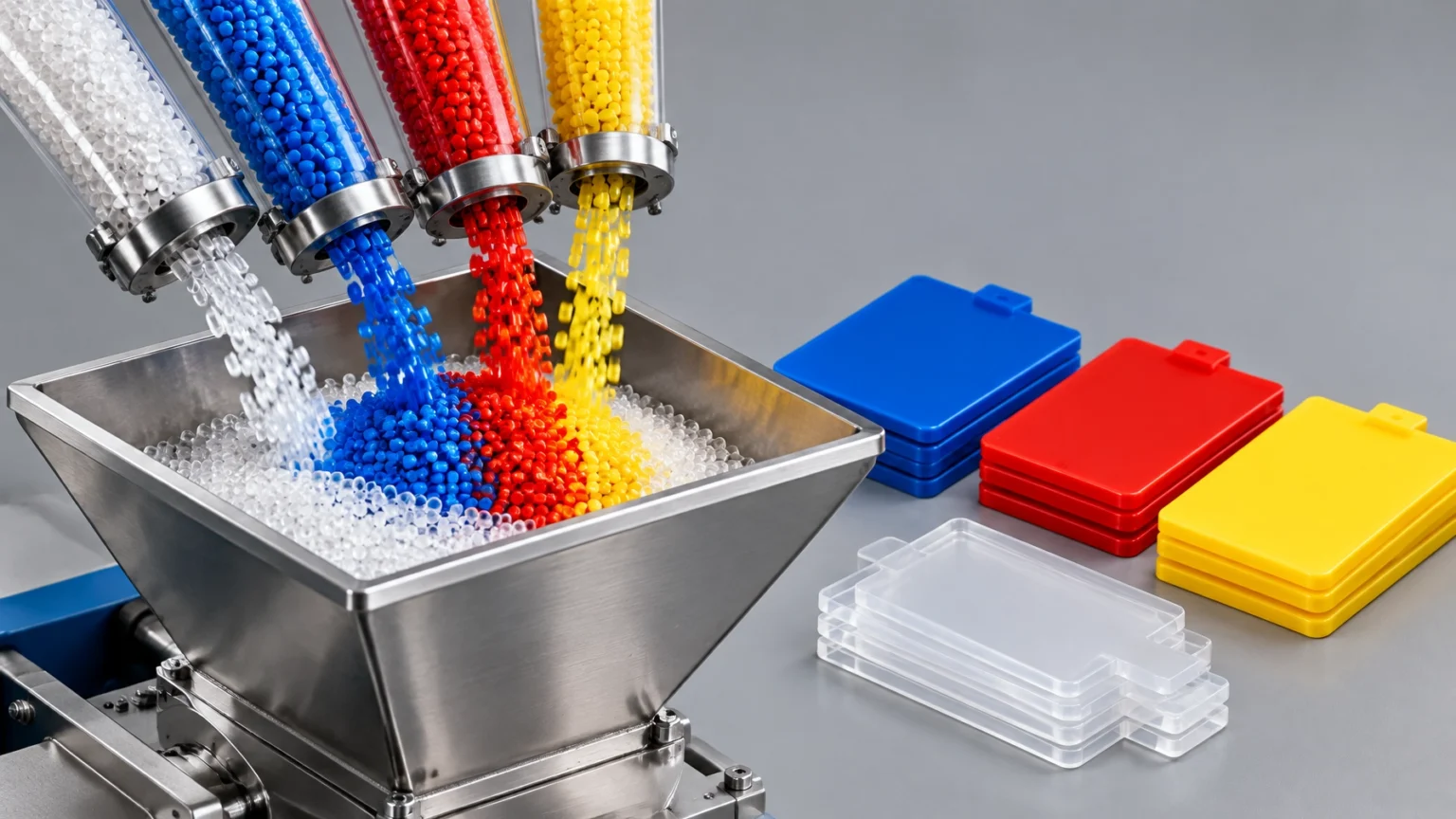
A plastic part’s color is part of its specification. It affects brand recognition, product appearance, and whether components look consistent when assembled or displayed together. For B2B buyers, the practical challenge is not simply selecting a color. It is defining an approval standard and controlling the material and molding variables that affect the finished part.
A reliable color process starts with a clear reference, continues with production-representative samples, and carries through to repeatable checks on each run. Here is what to consider when sourcing custom injection molding.
Why consistent color matters
Color variation can make parts from different lots look mismatched, undermine a branded product, or create problems when components are assembled. The risk is easy to underestimate when parts are evaluated individually: slight differences may become more noticeable when many parts sit together.
Consistency is especially important for
large cosmetic surfaces,
visible components,
multi-part assemblies, and products made in recurring production runs. Establishing how color will be evaluated before production helps buyer and molder agree on what constitutes an acceptable match.
From a Pantone reference or sample to a molded part
A Pantone reference or physical sample is a useful starting point, but it is not a complete molding specification. A printed or coated color reference and a molded plastic part are different materials with different surface characteristics. A color that appears close on a screen or paper sample may not look the same in a particular resin, thickness, texture, or gloss.
For a custom color, provide the molder with the best available reference:
- A physical sample is often the most useful starting point. Send a clean, undamaged example and identify the surface and viewing conditions that matter.
- A Pantone reference can communicate the intended color, but treat it as a target for matching rather than a guarantee that the molded part will look identical.
- A digital image or screen value can help explain the goal, but should not serve as the sole acceptance standard. Screens, lighting, and image processing all affect perceived color.
The molder and colorant supplier can use the reference to develop a colorant formulation for the
specific resin and part. The next step is to mold a sample under representative conditions. Approving a color on molded plaques or first articles is more meaningful than approving the appearance of dry pellets alone.

Choosing a coloring method
Color can be introduced into plastic in several ways. The right option depends on the resin, color requirements, production volume, and process.
Masterbatch
Masterbatch is a concentrated blend of pigments or dyes dispersed in a compatible carrier resin. It is metered into the base polymer at a specified
let-down ratio (LDR). Because it is a concentrate, the correct dose and consistent mixing are essential to achieving even color.
Masterbatch is widely used for custom colors because it can be specified for a particular polymer and application. Ask whether the carrier is compatible with the base resin and whether the supplier has matched the color for the intended material.
Pre-colored resin
Pre-colored resin is compounded with color before it reaches the molding machine. The color is already distributed through the resin, which removes the need to meter a separate color concentrate during molding. This can make it a good fit when repeatability is a priority, though it may involve different sourcing, inventory, and order-volume considerations than using a masterbatch.
Liquid color
Liquid colorants are metered into the resin in liquid form. They may suit certain materials or production setups, but compatibility, dosing equipment, handling, and cleaning requirements should be reviewed before selecting this method. The colorant supplier and molder can help determine whether it is appropriate for the application.
In each case, the colorant must suit the resin and molding process. Do not select a coloring method based only on the appearance of the concentrate or the name of a color standard.
Let-down ratio and carrier compatibility
The
let-down ratio is the proportion of masterbatch blended with the base resin. For example, a 2% LDR means the masterbatch makes up 2% of the defined blend. The ratio must be specified and controlled: a dosing change can shift color, while inconsistent mixing can create streaks or uneven shade.
The masterbatch’s
carrier resin matters because it helps disperse the colorant into the base material. If the carrier is not a suitable match for the base polymer, it can affect dispersion and may influence part appearance or performance. Confirm the resin grade and colorant formulation together rather than treating color as a stand-alone input.
For buyers, useful questions include:
- What is the approved colorant part number and LDR?
- Is the colorant formulated for the exact resin grade?
- How will the supplier control and record the blend?
- What happens if the resin, colorant lot, or process changes?
How color matching is evaluated
For measurable, repeatable comparisons, a
spectrophotometer reads reflected light and reports color coordinates. In the CIELAB color space,
L* represents lightness,
a* represents the red–green axis, and
b* represents the yellow–blue axis. The difference between a sample and a reference can be expressed as
Delta E (ΔE).
Delta E is useful, but it is not a complete specification by itself. The result depends on the measurement method and formula used. Buyer and supplier should agree on the color-difference formula, tolerance, measurement conditions, and the location on the part to be checked.
ASTM D2244 describes calculating color differences and tolerances from instrumentally measured color coordinates.
A practical approval sequence is:
- Set the target. Provide a physical reference or color standard and identify the resin, finish, and visible part areas.
- Mold a lab plaque or representative sample. Use the intended resin and colorant formulation. A plaque is helpful for repeatable readings; a representative part reveals the effect of geometry and surface finish.
- Measure and review. Compare the sample with the target using the agreed method, then inspect it visually under consistent lighting.
- Approve a first article. Sign off on a production-representative part, not just a color chip or pellet sample.
- Retain the approved reference. Keep an identified sample and its measurement conditions so later runs can be compared against the same standard.
A spectrophotometer supports objective comparison, but it does not replace visual approval. For further background,
X-Rite’s guide to validating plastic color during molding explains how measurement can help monitor color through production.

Why the same colorant can look different
The colorant is only one part of the final appearance. Several factors can affect what the eye sees and what an instrument measures:
- Natural resin color: The base polymer can have an inherent tint. A small difference between resin lots may influence a light or transparent color.
- Transparency and part thickness: Light passes through translucent materials differently depending on thickness, geometry, and viewing conditions.
- Texture and gloss: A textured, matte, or high-gloss surface can change perceived color, even when the formulation is unchanged.
- Mold and process conditions: Melt and mold temperatures, residence time, and mixing can affect shade or colorant dispersion. Changes in setup can produce visible differences.
- Lighting: A part may appear to match under one light source and differ under another. If the part must coordinate with other materials or be viewed in specific settings, include those conditions in approval.
These variables are why a color should be approved in the intended material and, whenever practical, on the actual part or a representative molded sample. A useful resource on measurement considerations is
Plastics Technology’s guide to measuring color in plastics.
Regrind and color variation
Regrind, ground runners or rejected parts that are reused in production, can affect color because it brings previously processed material back into the blend. Its color, heat history, and proportion in the mix can influence the finished part.
If regrind will be used, define the permitted source and percentage in advance. Regrind from a different color or an unknown material stream can create unwanted variation. For color-critical parts, ask the molder how regrind is segregated, controlled, and included in the approved material specification.
Matching across resins and future production runs
A color formula developed for one resin should not automatically be assumed to match in another. Different polymers can have different natural color, transparency, and processing behavior. If a part design changes material, or if several components use different resins, each material may need its own color-matching and approval process.
For run-to-run consistency, maintain a written record of the approved reference, resin grade, colorant identification, LDR, regrind allowance, and acceptance method. Keep those details with the first-article approval. If an input or process changes, evaluate the effect before treating it as equivalent to the approved setup.

Questions to ask your injection molder
Before approving a custom color, clarify:
- What sample or standard will serve as the color target?
- Will the approval sample use the production resin and finish?
- How will color be measured, and what tolerance applies?
- How will the colorant, LDR, and any regrind content be documented?
- How will changes in resin, colorant, or process be reviewed?
- Will a first-article sample be retained for comparison with future runs?
Clear answers help turn “match this color” into a repeatable manufacturing requirement.
Frequently asked questions
Is a Pantone code enough to match a molded plastic part?
It is a useful reference, but not a full acceptance specification. Confirm the match on a molded sample made from the intended resin and agree on how color will be evaluated.
What does Delta E tell me?
Delta E expresses the measured difference between a sample and a reference under a defined method. The agreed formula and measurement conditions matter, so a Delta E limit should be stated alongside them.
Should I approve color using pellets or a molded part?
Use a molded plaque or representative part for approval. The resin base color, molding conditions, thickness, and finish can all affect how the final part looks.
Can the same color formulation be used with different resins?
Not necessarily. A change in resin can alter the appearance of a colorant. Validate the color in each material that will be used.
Make color a defined part of the specification
Consistent molded color depends on more than the pigment. It requires a suitable colorant and carrier, a controlled let-down ratio, an agreed method of measurement, and production-representative approval samples. Documenting those decisions before a run makes future comparisons more objective and helps reduce avoidable variation.
Delaney Manufacturing Services supports projects from
product development and
injection molding through
mold production and management. If you are planning a custom molded part or evaluating a production partner,
contact our team to discuss your requirements.
|
| Images for illustrative purposes. |