
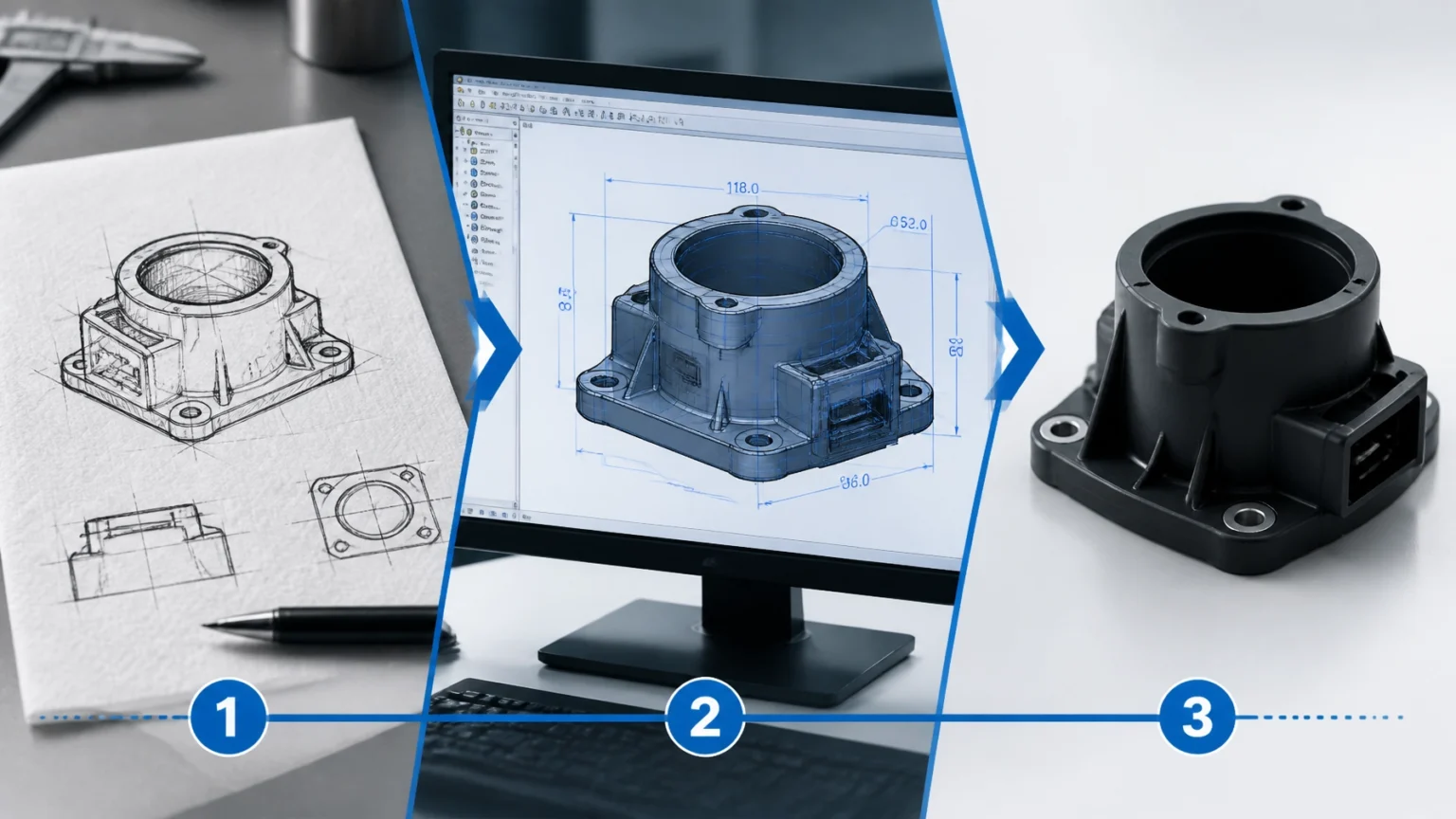
Bringing a new plastic product to market is a complex undertaking that requires a strategic blend of engineering precision, manufacturing expertise, and logistical coordination. For many entrepreneurs and established businesses, the journey begins with little more than a “napkin sketch”: a conceptual drawing that identifies a market need but lacks the technical specifications required for mass production.
At Delaney Manufacturing Services, we specialize in bridging the gap between that initial concept and a retail-ready product. With over 50 years of industry experience, we have refined an end-to-end product development lifecycle that minimizes risk and maximizes quality. This guide provides a comprehensive, step-by-step breakdown of how we transform ideas into physical reality through our integrated manufacturing services.
The process begins with an initial consultation, where the focus is on understanding the client’s vision, functional requirements, and target market. Whether you come to us with a hand-drawn sketch or a rough physical model, our team evaluates the project based on several critical factors:
This phase is consultative and educational. Our goal is to ensure the project is viable from both an engineering and a business perspective before any significant investment is made in design or tooling.
Once the concept is defined, it moves into 3D CAD (Computer-Aided Design). This is where the “napkin sketch” is translated into a precise digital geometry. This stage is governed by Design for Manufacturing (DFM) principles, ensuring the part can be efficiently produced via injection molding.

During CAD development, we focus on technical details that are often overlooked by non-specialists:
Before committing to steel or aluminum tooling, we utilize rapid prototyping technologies. Using 3D printing or high-precision laser cutting, we create physical samples that allow for form, fit, and functional testing. This iterative process allows clients to hold their product, test assemblies, and make refinements before the final design is frozen.

The most significant investment in the plastic product development lifecycle is the creation of the injection mold (often called “tooling”). The mold is a precision-engineered piece of hardware that acts as the negative of your final part.
At Delaney, we manage the entire mold production process. Depending on the project’s volume and complexity, we determine the best tooling strategy:
We also offer mold management for clients who have existing tooling. We can take over the maintenance and operation of your existing molds, ensuring they remain in peak condition for consistent production.
With the mold completed and the material selected, we move into the injection molding production phase. This is the core of our manufacturing operation, where raw plastic resin is transformed into finished components.

The process follows a highly repeatable cycle:
Our facility utilizes modern Tederic Injection Molding machines and auxiliary equipment to ensure precision and repeatability. Because we have no minimum order requirements, we can accommodate everything from small batch runs for startups to high-volume production for global manufacturers.
A product is not “finished” until it is ready for the customer. Unlike traditional manufacturers who stop at the machine’s edge, Delaney Manufacturing Services offers full-service fulfillment to streamline your supply chain.

Our in-house capabilities include:
Choosing a single partner for the entire lifecycle offers significant strategic benefits. When the same team that designs the CAD also builds the mold and runs the production, there is no “hand-off” risk. Any engineering challenges are identified early, and accountability remains centralized.
At Delaney Manufacturing Services, we are committed to providing a seamless experience. Whether you are an inventor looking to launch your first product or a procurement manager seeking a more reliable production partner, our 50+ years of expertise ensure your project is handled with technical precision and care.
To learn more about how we can take your project from a napkin sketch to a finished product, contact us today for a same-day response on your initial inquiry.
| Images for illustrative purposes. |