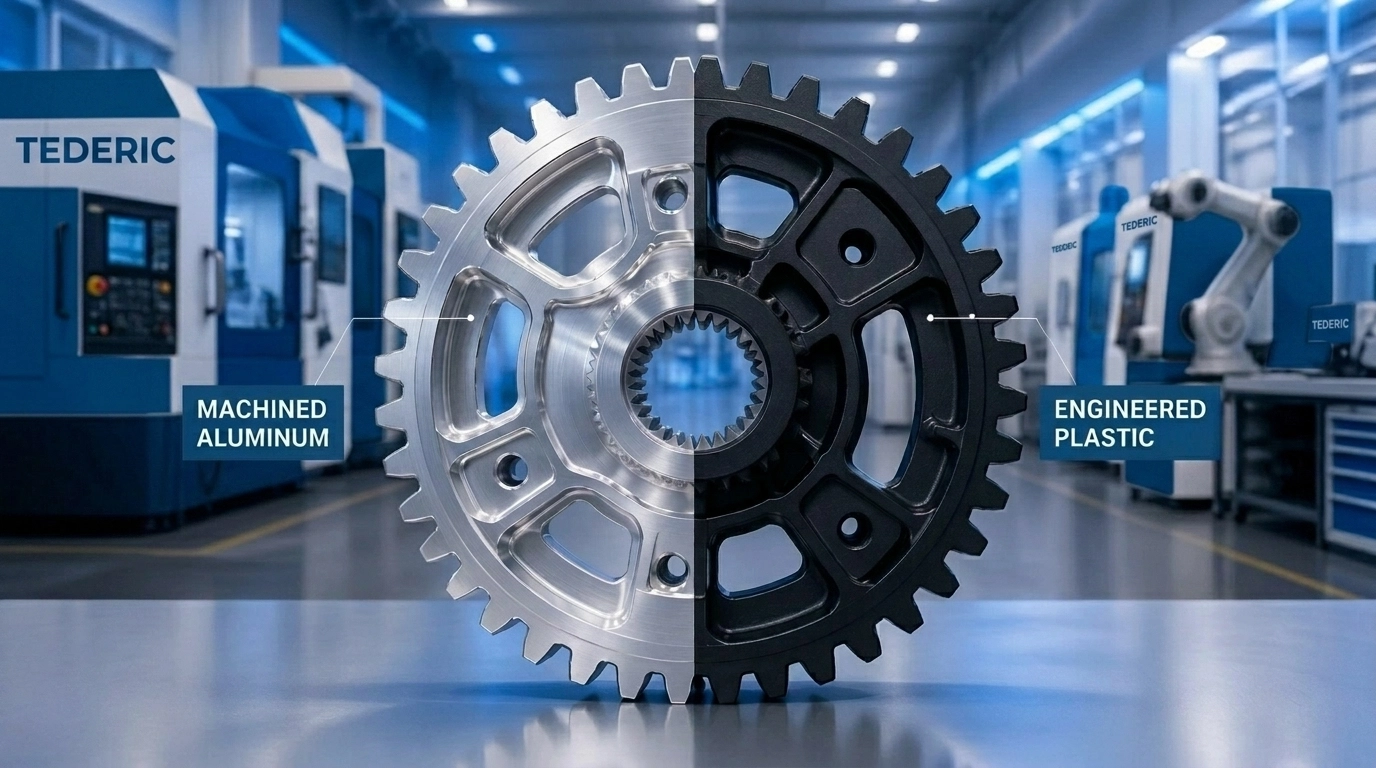
For decades, the manufacturing industry viewed metal as the gold standard for durability and strength. However, advancements in polymer science and precision engineering have shifted this paradigm. Today,
metal-to-plastic conversion is not merely a material change; it is a strategic business decision that can drastically reduce production costs while improving product performance.
At
Delaney Manufacturing Services, we have spent over 50 years helping clients navigate this transition. By leveraging custom injection molding, businesses are finding that they can achieve higher precision, lighter weights, and significant cost savings without sacrificing the structural integrity of their components.
The Economic Reality of Metal-to-Plastic Conversion
The most immediate impact of switching from metal to plastic is the reduction in
total cost of ownership. While the initial engineering phase requires careful planning, the long-term savings are substantial. Industry data suggests that converting metal components to plastic can result in
overall cost savings of 25% to 50%.
1. Reduction in Material and Machining Costs
Raw metal prices are subject to significant market volatility. In contrast, high-performance engineered plastics offer more stable pricing models. Furthermore, metal parts often require extensive secondary operations: such as CNC machining, deburring, and polishing: to reach the final specification.
Plastic injection molding produces high-complexity parts in a single cycle, virtually eliminating the need for post-production machining.
2. Tooling Longevity
A common misconception is that metal molds are a high-overhead expense. However, when comparing the lifecycle of a mold to the lifecycle of metal casting tools, the advantages are clear. High-quality steel molds used in plastic injection molding can last
six to ten times longer than cast metal tooling, providing a much higher return on investment (ROI) over the life of the product.
3. Lower Logistics and Shipping Expenses
Weight reduction is a critical factor in modern logistics. Engineered plastics can offer a weight reduction of up to
50% compared to metal counterparts without losing tensile strength. For businesses shipping thousands of units globally, this weight reduction translates directly into lower fuel surcharges and shipping rates.
Enhancing Performance: It’s Not Just About Cost
While cost is a primary driver, the technical advantages of plastic are equally compelling. Modern polymers are engineered to withstand extreme environments that would cause traditional metals to fail.
- Corrosion Resistance: Unlike steel or aluminum, plastics are inherently resistant to oxidation and chemical exposure. This makes them ideal for medical, marine, and industrial applications where moisture or harsh chemicals are present.
- Impact and Heat Resistance: High-performance resins like PEEK or glass-filled nylons offer exceptional thermal stability and impact resistance, often surpassing the performance of zinc or aluminum die-casts.
- Tight Tolerances: Precision injection molding allows for incredibly tight tolerances, ensuring that every part is identical to the last. This consistency is vital for complex assemblies where precision is non-negotiable.

Part Consolidation: Simplifying the Supply Chain
One of the most powerful benefits of custom injection molding is
part consolidation. In traditional metal manufacturing, a complex component might be composed of several individual brackets, fasteners, and supports that must be welded or bolted together.
Through advanced CAD design and engineering, we can often combine these separate metal pieces into a
single molded plastic part.
The benefits of part consolidation include:
- Reduced Assembly Time: Fewer parts mean faster assembly and lower labor costs.
- Elimination of Fasteners: Built-in clips, bosses, and snap-fits eliminate the need for screws and bolts, which are common points of failure.
- Improved Structural Integrity: A single monolithic part is often stronger and less prone to vibration or loosening than an assembly of multiple components.
The Strategic Advantage of Design Flexibility
Metal fabrication is often limited by the constraints of machining tools or casting processes. Injection molding breaks these barriers, offering unparalleled
design freedom.

At Delaney Manufacturing, our
product development services take your concepts from a “napkin sketch” to a retail-ready product. Because plastic can be molded into almost any geometry, we can incorporate complex internal channels, intricate textures, and ergonomic shapes that would be impossible or cost-prohibitive to machine in metal.
Furthermore,
in-mold decorating allows us to integrate colors, logos, and textures directly into the part during the molding process. This removes the need for secondary painting or labeling, further streamlining your production line.
Transitioning from Metal to Plastic: The Delaney Process
Moving from metal to plastic requires more than just swapping materials; it requires a complete re-engineering of the part to take advantage of polymer properties.
 Our end-to-end process ensures a seamless transition:
- CAD Design & Engineering: We analyze your existing metal part and re-engineer it for plastic, focusing on wall thickness, ribbing for strength, and draft angles for easy ejection.
- Prototyping & 3D Printing: Before cutting steel for a mold, we use high-fidelity 3D printing and prototyping to test form, fit, and function.
- Mold Production: We handle the creation of precision molds designed for long-term high-volume production or cost-effective short runs.
- Injection Molding Production: With no minimum order quantities, we provide the flexibility that entrepreneurs and established manufacturers alike need to manage their inventory.
End-to-End Solutions: From Concept to Fulfillment
A significant challenge in manufacturing is managing multiple vendors for design, production, and shipping.
Delaney Manufacturing Services eliminates this friction by offering a full-service, “under one roof” solution.

Once your parts are molded, our work isn’t done. We offer:
- In-House Assembly: Our team handles the final assembly of your products, ensuring quality control at every step.
- Custom Packaging: We can package your products so they are retail-ready the moment they leave our facility.
- Direct Drop-Shipping: We can ship directly to your customers or distribution centers, saving you the hassle of warehousing and secondary logistics.
Conclusion: Partnering with 50+ Years of Expertise
Choosing between metal and plastic is a pivotal moment in the lifecycle of any product. While metal has its place, the economic and functional advantages of custom injection molding are undeniable for those looking to scale efficiently and cut production costs.
With over
50 years of experience, Delaney Manufacturing Services is more than just a vendor; we are a strategic partner. Whether you are an inventor with a new concept or an established firm looking to optimize your current production, our team is committed to providing same-day responses and high-quality US-based manufacturing.
Ready to see how metal-to-plastic conversion can transform your bottom line?
Contact Delaney Manufacturing today to discuss your project and receive a comprehensive quote.
|
| Images for illustrative purposes. |