For many inventors and small business owners, the path from a conceptual “napkin sketch” to a physical product is often blocked by a significant financial hurdle: the
Minimum Order Quantity (MOQ). Conventional manufacturing wisdom suggests that high-volume production is the only way to achieve cost-effectiveness. Consequently, many entrepreneurs find themselves forced to order thousands of units they cannot yet sell or afford to store.
Short run injection molding serves as a strategic alternative, offering the precision and material integrity of traditional molding without the prohibitive volume requirements. At Delaney Manufacturing Services, we leverage over 50 years of industry experience to provide
plastic injection molding services that prioritize flexibility. By offering a “no minimums” policy, we empower creators to scale their production at a pace that aligns with their actual market demand.
1. Drastic Reduction in Financial Risk
The most immediate benefit of short run production is the mitigation of financial exposure. Traditional high-volume molding requires significant upfront investment in hardened steel molds designed to last for millions of cycles. For a new product with unproven market demand, this capital outlay represents a substantial gamble.
Lower Tooling Costs
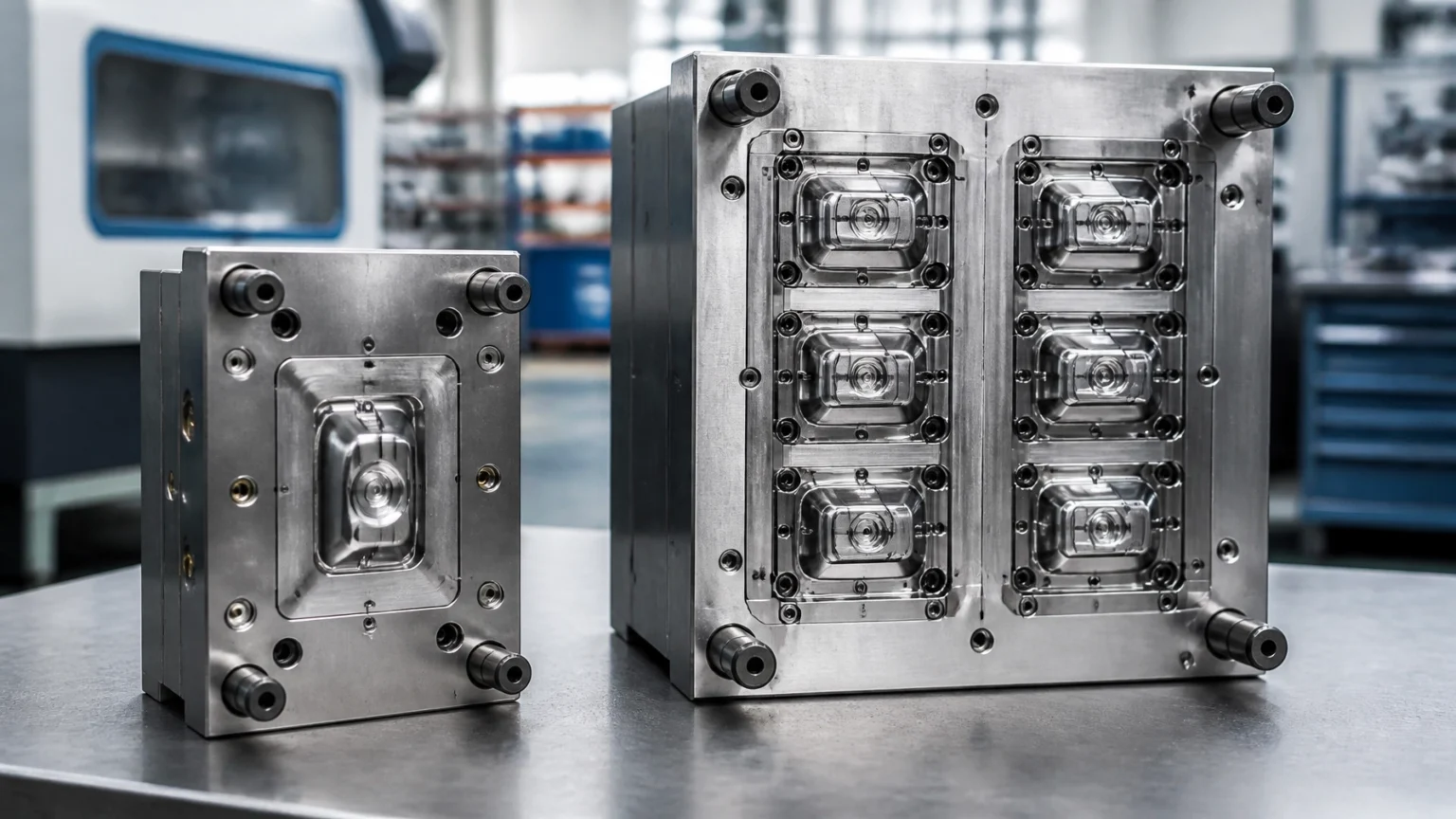
Short run projects often utilize aluminum or pre-hardened steel alloys for mold construction. These materials are easier to machine, which significantly reduces the initial cost of the mold. While these tools may not be suitable for runs of 500,000 units, they are ideal for batches ranging from a few dozen to several thousand parts.
Capital Allocation
By avoiding high MOQs, businesses can keep their capital fluid. Instead of tying up tens of thousands of dollars in a massive inventory of finished parts, entrepreneurs can allocate those funds toward marketing, further product development, or operational overhead. This lean approach to manufacturing is essential for startups and inventors operating on tight budgets.
2. Accelerated Market Validation and Testing
In the product development lifecycle, speed is a competitive advantage.
Short run injection molding allows you to move from the prototyping phase to market-ready parts in a fraction of the time required for high-volume setups.

Real-World Feedback
Unlike 3D printing or CNC machining, which are excellent for fit-and-function testing, injection molding uses the exact thermoplastic resins intended for the final product. This means the parts you receive from a short run are “production-grade.” You can put these parts into the hands of early adopters or use them for pilot programs, gathering authentic feedback on durability, aesthetics, and user experience.
In-House 3D Print Farm for Prototypes and Small Batches
Our
in-house 3D print farm adds another practical option during the early stages of product development. For clients who are not yet ready to invest in tooling, 3D printing can be used to produce
functional prototypes as well as
small production batches up to several hundred units. This is especially useful for market testing, investor samples, pilot launches, and early customer feedback.
Because these parts can be produced quickly, clients can evaluate form, fit, and function in the real world before committing to injection molding. It also creates an efficient path for refining geometry, features, and usability based on actual user input. In many cases, this process bridges the gap between concept validation and full-scale manufacturing, allowing a product to generate traction before injection molding is financially justified.
Beating the Competition
The ability to launch a limited “Beta” batch of a product allows you to establish a market presence before competitors can react. Whether that first run is produced through our 3D print farm or through short run molding, Delaney Manufacturing Services helps clients move from
CAD design services to physical parts with minimal delay.
3. Enhanced Design Flexibility and Iteration
One of the greatest dangers in manufacturing is discovering a design flaw after a high-volume steel mold has already been fabricated. Modifying a hardened steel tool is incredibly expensive and, in some cases, technically impossible.
The “Fail Fast” Philosophy
Short run molds offer a higher degree of flexibility. If market testing reveals that a snap-fit needs to be stronger or a wall thickness needs to be adjusted, aluminum or soft-steel tools can be modified much more easily and affordably. This allows for a “design-mold-test-refine” loop that ensures the final, high-volume version of the product is perfected based on real-world data.
Product Customization
Short run production also enables companies to offer limited edition versions or specialized variations of a product for different niche markets. Because there are no minimums, you can produce a small batch in a specific color or with a unique resin additive without the burden of excessive inventory.
4. Optimized Inventory and Storage Management
For many small businesses, the cost of manufacturing is only half the battle; the other half is logistics. Large-scale orders necessitate warehouse space, climate control, and complex inventory tracking systems.

Reducing Overhead
By utilizing
short run injection molding, you adopt a “Just-in-Time” (JIT) manufacturing mindset. You produce only what you need to fulfill current orders or immediate demand. This eliminates the need for expensive long-term storage and reduces the risk of “dead stock”: products that sit on shelves for years and eventually become obsolete or damaged.
End-to-End Fulfillment
At Delaney Manufacturing Services, we streamline this process further by offering in-house assembly, packaging, and direct drop-shipping. This means your short run parts move directly from our production floor to your customers’ doorsteps, completely bypassing the need for you to manage a physical warehouse.
5. A Strategic Bridge to High-Volume Production
Short run molding is not just for small batches; it is a vital stepping stone for products destined for mass production. It provides a “proof of concept” that satisfies stakeholders and investors.

Scaling with Confidence
Once a product has successfully navigated several short runs and the design is fully optimized, the transition to high-volume production becomes much less risky. The data gathered during the short run phase: such as cycle times, shrinkage rates, and material performance: can be used to design a high-efficiency production mold with a much higher degree of certainty.
3D Printing as a Bridge to Production
For some products, the most efficient first step is not tooling at all. Our in-house 3D print farm allows clients to move from prototype to
small batch production up to several hundred units, which is ideal when demand is still being validated. This approach gives businesses time to test the market, confirm product-market fit, and make design improvements before committing to an injection mold.
Once sales volume, performance requirements, and long-term demand justify production tooling, the transition into injection molding is far more informed. In that sense, 3D printing serves as a strategic bridge between development and scalable manufacturing.
Bridge Tooling
In some cases, a short run mold serves as “bridge tooling.” While the permanent, high-volume steel mold is being fabricated (a process that can take months), the short run tool keeps the product in stock and the revenue flowing. This ensures there is no gap in market availability.
Why Choose Delaney Manufacturing Services?
Navigating the complexities of
plastic injection molding services requires a partner who understands the unique constraints of inventors and entrepreneurs. With over half a century of experience, we have seen every stage of the product lifecycle: from initial concepts sketched on paper to retail-ready products on store shelves.
Our commitment to a
no-minimum policy ensures that your project is never “too small” for professional attention. We pride ourselves on our technical expertise in areas like
metal-to-plastic conversion, helping clients re-engineer components for better durability and lower costs. Furthermore, our same-day response time ensures that your questions are answered and your project stays on schedule.

Whether you are looking to launch a single innovative product or need a reliable partner for ongoing low-volume production, our team is equipped to handle the entire process under one roof. From initial
CAD design and
3D printing to final
assembly and fulfillment, we provide the end-to-end support necessary to bring your vision to life without the burden of high minimums.
|
| Images for illustrative purposes. |